I really believe that whenever possible, you should build your own brand and sell your own product or service — an ebook like my Vacuum Sealer Guide, a service you offer, or a physical product. Treating it like a real brand from day one, even while it's still small, tends to push you to take it more seriously.
I try to practice what I preach — this site, RogerLikes, is a brand too. Even while it's still developing, I treat it like it's already a successful one. I've found that when you treat something like a real brand or business, you push yourself a little harder to live up to it.
Where this comes from
Part of this comes from watching it go wrong somewhere else. Earlier in my career I was involved with an internet marketing-related company that started out fine, but over time got more and more profit-motivated — to the point where it stopped really supporting the dealers who'd built their own businesses around it. Watching that play out taught me something that stuck: a brand name is a promise. The first time someone has a bad experience under your name, they don't just walk away from that one product — they walk away from everything else you might ever sell them.
That's the flip side of branding people don't always think about. It's not just marketing — it's accountability. If your name is on it and you do it right, that name starts carrying real weight, and people come back to it on purpose instead of by accident.
How I actually apply it at AirTanksPlus
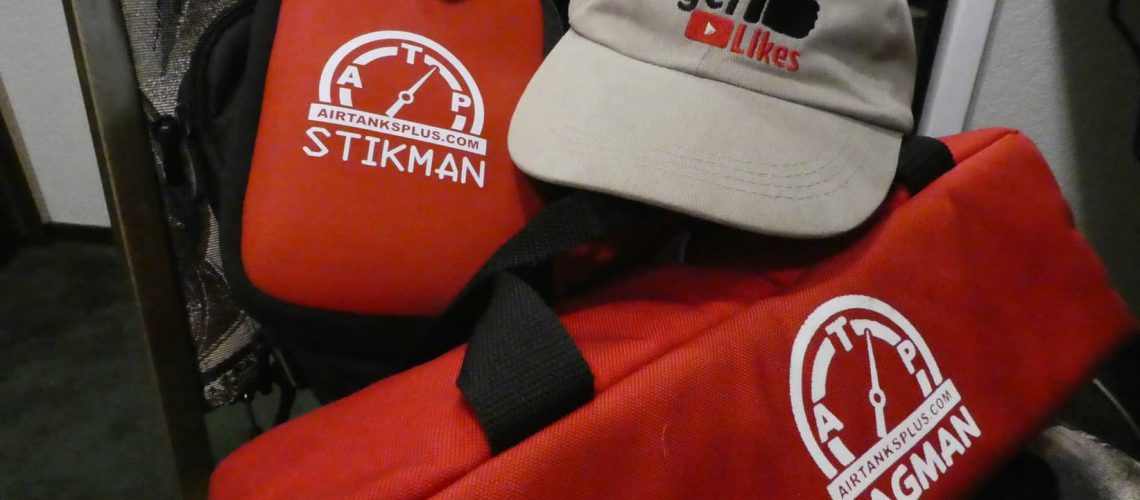
I could've sold a plain PCP fill adapter and called it exactly that. Instead it's the StikMan. The carrying bag that goes with it is the Bagman. Even a tube of grease we sell got its own branded label instead of shipping as a generic unmarked tube. Some of that is honestly just fun — coming up with a name and a little identity for something is enjoyable in a way that "SKU #4471" never will be. But it also does real work: instead of a shelf of disconnected parts, it starts to feel like one lineup that belongs together, made by people who actually thought about it.
I made this video a while back walking through exactly this — the StikMan, the Bagman, the branded grease, and the reasoning behind naming things instead of leaving them generic. It's the same argument in more detail, if you want to hear it rather than read it.
The takeaway
If you're selling anything — a physical product, a service, a skill, even just yourself — put a real name and identity on it. It doesn't have to be big or polished to start. Treating it like a brand from day one is what makes it feel worth taking seriously, both to you and to whoever's buying from you.
← Back to the blog