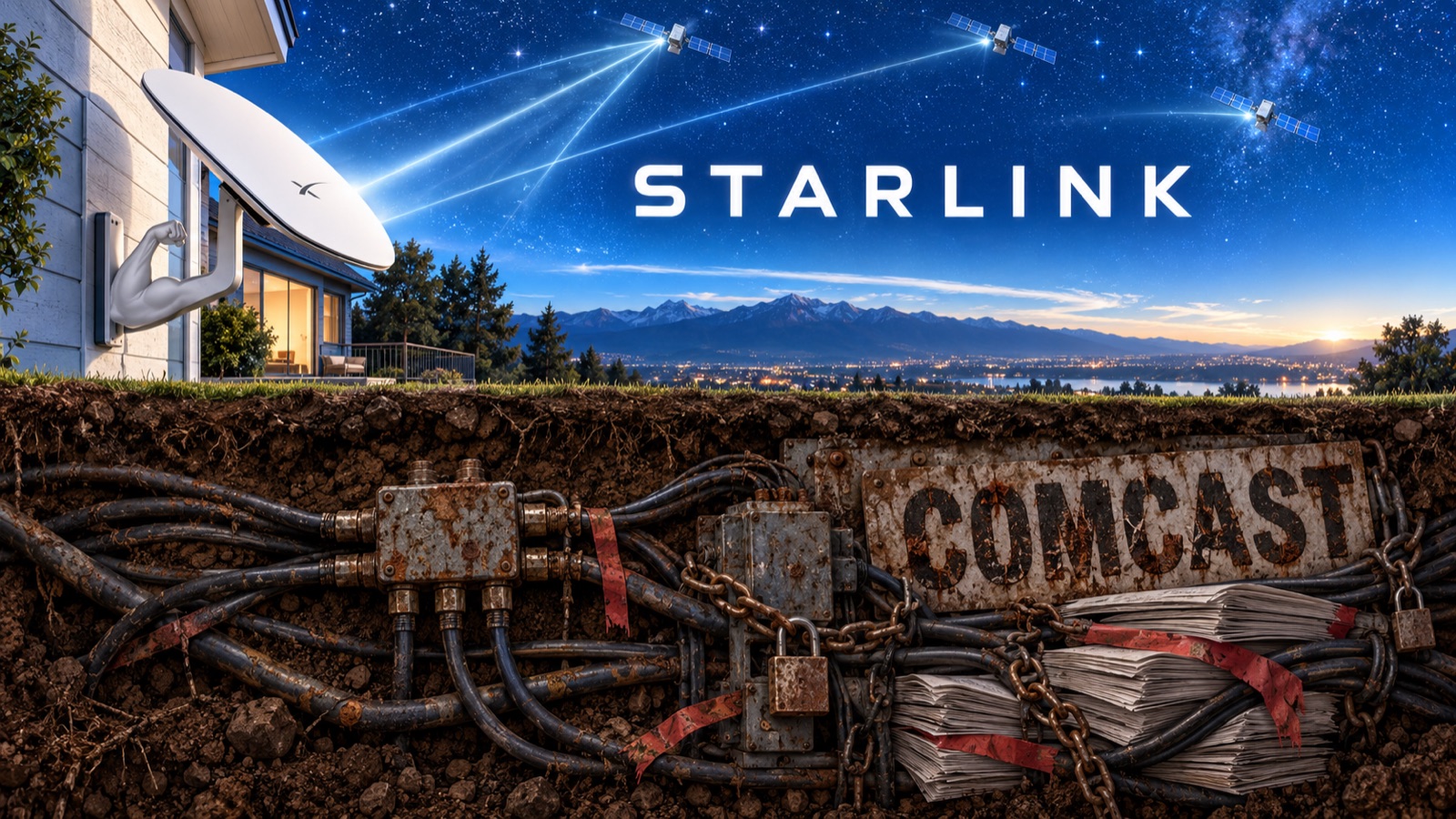
This one's still being written — I just placed the order, so this post will keep growing as I actually get the thing installed and see how it holds up against Comcast. Come back for updates.
I've been a Comcast cable internet customer for a long time, and like a lot of long-time customers, I've watched my bill climb with no real explanation — I'm at $85/month now. Meanwhile, a brand new customer can sign up today and lock in $55/month for five years. Loyalty gets you punished, not rewarded. That's been sitting wrong with me for a while.
I've already been running a Starlink Mini for camping and travel, and I've genuinely loved it — easy to set up, works where cell signal doesn't, and it's earned a permanent spot in my gear. But the Mini is a metered plan, capped at 100GB a month, which makes sense for occasional travel use but isn't built to replace a home connection.
That's changed. Starlink now offers full residential unlimited plans: 100Mbps for $55/month, 200Mbps for $85/month, and a top "Max" tier at $130/month — I'll fill in the exact speed on that last one once I've dug into it more. I just ordered a Starlink V5 as a rental, not a purchase, specifically so I can actually test it against Comcast before committing to anything permanent.
Why I'm rooting for this to work
Part of it is practical — I want out of Comcast's pricing games. Part of it is that I like what Starlink and Elon are building, and I'd rather put my money there. And part of it is just curiosity: how does the same technology that's kept me connected in a tent in the middle of nowhere hold up as a full-time replacement for cable at the house?
More to come once it's installed.
← Back to the blog